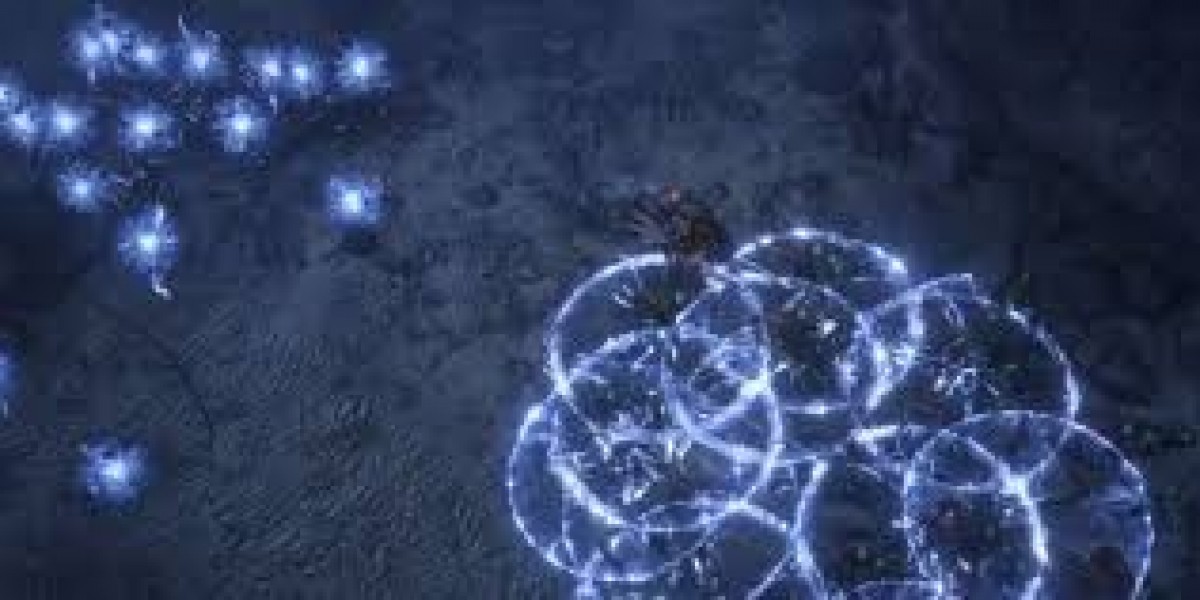

To step into the endgame of POE 1 Currencyis to enter a world moving at a breakneck pace. A core, unspoken tenet of the game's high-level play is the emphasis on "clear speed"—the ability to annihilate entire screens of monsters and traverse maps with blinding velocity. This is not merely a stylistic choice; it is a fundamental economic and progression strategy deeply woven into the game's systems. The faster you clear, the more loot and experience you generate per hour, creating a self-reinforcing loop where mobility and area-of-effect dominance become the paramount measures of a build's success.
This philosophy is reflected in every aspect of endgame build design. Skills are chosen not just for their damage, but for their coverage and cast or attack speed. Popular league-starting builds like Tornado Shot, Righteous Fire, or Summon Raging Spirits are celebrated for their ability to efficiently wipe out packs with minimal input. Passive trees and gear are meticulously optimized to reduce animation times, increase movement speed, and enhance area-of-effect radius. Support gems like Chain, Pierce, or Greater Multiple Projectiles are prized for their ability to multiply a single attack's reach across a room. The goal is to minimize the time between monster packs, turning maps into a fluid, almost rhythmic sprint of destruction.
This relentless focus on speed is directly incentivized by the game's reward structure. PoE1's loot is governed by volume. More monsters killed per minute means more currency drops, more rare items to filter through for valuable bases, and more map sustain. League mechanics often reward swift clearing; for example, faster players can activate more Legion monoliths or clear Delirium mirrors before the timer expires. The economic meta revolves around this efficiency. The most successful players are those who can "run more maps per hour," making investments that shave seconds off their clear time—a faster movement skill, a quicksilver flask with increased effect, a shield charge linked to Faster Attacks—all directly translate to greater wealth and experience accumulation.
This paradigm also shapes—and some would argue, narrows—the viable endgame experience. Builds that are tanky but slow, or that excel at single-target damage but lack screen-wide clear, are often relegated to niche roles like boss-killing specialists. The pressure to go fast can make the game feel frantic and visually overwhelming, with players relying heavily on strict loot filters to ignore 99% of drops without breaking stride. It creates a specific, acquired taste: the exhilaration of becoming an unstoppable force of nature, a farmer harvesting chaos orbs and experience from a maelstrom of one’s own creation. In Wraeclast, speed is not just a metric; it is the dominant currency, and the entire endgame is architected around its relentless pursuit.